Recovering from an injury is frustrating I’ve been there. A few years ago, I strained my knee playing weekend football. The doctor told me it wasn’t serious, but I needed structured rehab. The problem? I couldn’t visit a physiotherapist regularly. That’s when I started researching sports injury recovery exercises at home, and honestly, it changed how I view injury rehabilitation forever.
If done correctly, injury recovery at home can be safe, effective, and empowering. The key is knowing what to do, when to do it, and when to stop.
This guide will walk you step by step through a safe sports injury rehab plan at home, covering mobility, strengthening, and stability exercises all without expensive equipment.
Why Home-Based Sports Injury Recovery Matters
As someone who has worked closely with recreational athletes and active adults, I’ve seen one common challenge: consistency. Many people start physical therapy with great motivation, but busy schedules, travel time, and clinic costs often interrupt progress. That’s where home based sports injury recovery becomes incredibly valuable.
Home rehab isn’t about replacing medical care. It’s about extending it. When you understand your injury, follow evidence-based exercises, and progress gradually, you empower your body to heal safely and efficiently.
Benefits of Home Rehab
Doing home rehab exercises offers several advantages:
1. Convenience and Flexibility
One of the biggest barriers to recovery is time. Between work, family responsibilities, and commuting, attending multiple clinic visits each week isn’t always realistic.
Home rehab allows you to:
-
Exercise on your own schedule
-
Perform shorter, more frequent sessions
-
Integrate recovery into your daily routine
From my experience, patients who remove logistical obstacles are far more consistent — and consistency is the foundation of recovery.
2. Lower Cost Compared to Clinic Visits
In the U.S., physical therapy sessions can become expensive, especially for those with high deductibles or limited insurance coverage.
Home-based rehab:
-
Reduces the number of in-clinic appointments needed
-
Minimizes transportation expenses
-
Makes long-term recovery more financially sustainable
While professional evaluation is essential for diagnosis and guidance, many strengthening and mobility exercises can be safely continued at home after proper instruction.
3. Gradual, Self-Paced Progression
In a clinic, sessions are time-limited. At home, you can move at a pace that matches your comfort level and pain tolerance.
This allows you to:
-
Focus on proper form
-
Rest when needed
-
Increase intensity gradually
From a rehabilitation standpoint, gradual loading is critical for tissue healing. Rushing progress often leads to setbacks. Home rehab encourages mindful progression instead of pressure to “push through.”
4. Greater Body Awareness
One of the most underrated benefits of home rehab is improved body awareness.
When you perform exercises independently:
-
You learn how your injury responds to movement
-
You recognize early warning signs of overuse
-
You build a stronger mind-muscle connection
In my clinical experience, patients who develop this awareness are less likely to re-injure themselves and more likely to maintain long-term mobility and strength.
When Home Rehab Works Best
Home-based recovery is most effective for:
-
Mild muscle strains
-
Minor ligament sprains
-
Tendon overuse injuries
-
Post-activity soreness management
However, severe pain, swelling, instability, or suspected fractures should always be evaluated by a licensed healthcare professional.
When structured correctly, sports rehab at home can be just as effective for mild injuries as supervised therapy.
If you’re already following a structured recovery timeline like this detailed sports injury recovery guide, adding a proper exercise routine accelerates healing.
When Home Recovery Is Safe
You can safely focus on at home physical therapy if you have:
-
Mild muscle strains
-
Minor ligament sprains
-
Joint stiffness
-
Overuse injuries
When to Seek Medical Help
Avoid relying only on home physiotherapy exercises if you experience:
-
Severe swelling
-
Instability
-
Loss of mobility
-
Persistent sharp pain
In such cases, consult a professional before continuing.
Important Safety Rules Before Starting Recovery Exercises
As someone who has guided active individuals through injury recovery, I can confidently say this: most setbacks happen because people start too aggressively, too early.
Rehab isn’t just about doing exercises, it’s about doing them at the right time and in the right way. Before beginning any home-based injury rehabilitation routine, follow these essential safety principles.
1. Wait Until Acute Swelling Reduces
If visible swelling, warmth, or throbbing pain is still present, your body is in the acute inflammatory phase. This is not the time to push mobility or strengthening exercises.
In this early stage, your priority should be:
-
Rest and protection
-
Elevation
-
Compression (if appropriate)
-
Strategic cold therapy
Trying to “work through” active swelling often delays healing and can worsen tissue damage. In my experience, patients who respect this early phase recover faster long term.
If you’re unsure about when to use cold or heat, refer to your guide on Ice vs Heat Therapy for Sports Injuries to make the correct choice for your injury stage.
2. Use the Pain Scale
Not all pain is bad during rehab but sharp, escalating pain is a red flag.
A practical and clinically accepted rule:
-
0–3/10 discomfort: Generally safe
-
4/10: Borderline — monitor closely
-
5+/10: Too aggressive
Mild discomfort during strengthening or mobility work is normal. However, stabbing, sharp, or worsening pain indicates that the tissue isn’t ready for that level of stress.
From real-world rehab experience, people who respect the pain scale progress steadily. Those who ignore it often experience flare-ups that set them back days or weeks.
During safe rehab exercises at home, discomfort is okay. Sharp pain is not. Stay below 4/10 pain level.
3. Always Warm Up
Even if you’re doing gentle mobility work, your muscles and joints need preparation.
A proper warm-up:
-
Increases blood flow
-
Improves joint lubrication
-
Enhances neuromuscular activation
-
Reduces reinjury risk
Simple warm-up examples include:
-
5–10 minutes of light walking
-
Gentle stationary cycling
-
Controlled range-of-motion drills
Skipping a warm-up is one of the most common mistakes I see in home rehab routines.
Even gentle mobility exercises for injury require light movement beforehand.
4. Move Without Sharp Pain
Rehabilitation should rebuild tissue tolerance not aggravate it.
Every movement should feel:
-
Controlled
-
Stable
-
Gradually challenging
It should never feel unstable, stabbing, or like something is “catching” or “giving out.”
If a movement consistently triggers sharp pain:
-
Modify the range
-
Reduce resistance
-
Slow the tempo
-
Or temporarily remove the exercise
Rehab is progressive loading — not punishment.
Professional Reminder
Home rehab works best for mild to moderate injuries. However, seek evaluation from a licensed healthcare provider if you experience:
-
Severe swelling
-
Joint instability
-
Numbness or tingling
-
Inability to bear weight
-
Pain that worsens after several days
Early assessment prevents long-term complications.
Types of Sports Injuries You Can Rehab at Home
Over the years, I’ve worked with active adults, weekend athletes, and gym-goers who assumed every injury required multiple clinic visits. The reality is different.
Many mild, non structural sports injuries respond very well to a structured injury recovery workout plan at home, if you follow proper progression and respect healing timelines.
That said, home rehab is appropriate only when the injury is stable, improving, and not showing red-flag symptoms (severe swelling, instability, numbness, or loss of function).
Below are the types of injuries that typically respond well to home-based recovery.
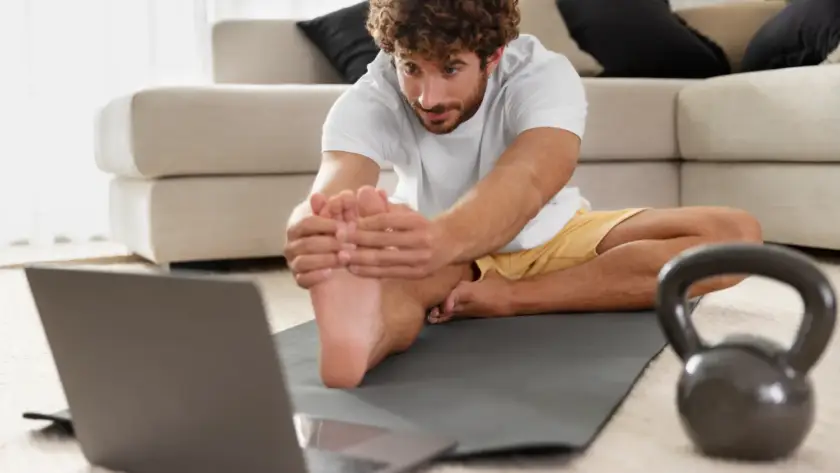
1. Mild Muscle Strains
Grade 1 muscle strains where the muscle is overstretched but not torn, often improve significantly with:
-
Gentle mobility work
-
Gradual strengthening
-
Light eccentric loading
-
Controlled return to activity
From a practical standpoint, most minor hamstring, calf, or shoulder strains recover efficiently when load is reintroduced slowly rather than avoided completely.
The key is controlled progression not aggressive stretching early on.
2. Minor Ligament Sprains
Low-grade ligament sprains (Grade 1) such as mild ankle or wrist sprains often heal well with:
-
Early protected movement
-
Balance and stability exercises
-
Gradual strengthening
-
Proprioceptive training
In my experience, ankle sprains are commonly undertreated. People stop rehab once pain decreases, but without balance work, reinjury risk stays high.
Home rehab is ideal here especially for rebuilding joint stability.
3. Tendon Irritation (Tendinopathy)
Tendon irritation from overuse like mild patellar, Achilles, or shoulder tendinopathy responds extremely well to structured loading.
Contrary to popular belief, complete rest is rarely the answer.
Evidence based recovery usually includes:
-
Isometric strengthening
-
Slow, controlled resistance training
-
Gradual load progression
When done correctly, tendon rehab at home can be highly effective because consistency matters more than intensity.
4. Joint Stiffness
After minor injuries or reduced activity, joints can become stiff and restricted.
Gentle mobility drills, controlled range of motion work, and light strengthening exercises can:
-
Improve circulation
-
Restore joint mechanics
-
Reduce discomfort
-
Prevent compensatory movement patterns
This is one of the safest and most effective areas for home-based recovery.
5. Overuse Injuries
Overuse injuries are extremely common in runners, gym athletes, and recreational sports participants.
These include:
-
Shin discomfort
-
Shoulder irritation
-
Mild knee pain
-
Elbow soreness
In most mild cases, recovery involves:
-
Activity modification
-
Gradual reloading
-
Mobility correction
-
Muscle imbalance correction
Based on real-world rehab experience, the biggest mistake with overuse injuries is either ignoring them or resting completely without rebuilding tissue capacity.
Home programs allow you to manage load while rebuilding strength.
When to Combine Home Rehab With Professional Guidance
Moderate injuries may still benefit from home exercises, but they should be guided by structured recovery timelines.
Using realistic expectations based on:
helps prevent frustration and premature return to sport.
Healing is biological. Muscles, ligaments, and tendons all have different recovery speeds. Pushing faster than tissue healing allows is one of the leading causes of reinjury.
Phase 1 – Gentle Mobility Exercises (Early Recovery Stage)
Goal: Restore Range of Motion Without Aggravating the Injury
The early recovery phase is not about building strength, it’s about restoring safe, pain-free movement.
In my experience working with active adults (and personally recovering from a knee injury), this phase is where patience matters most. Many people rush into strengthening too soon, but rebuilding mobility first creates a safer foundation for everything that follows.
During this stage, focus only on low impact recovery exercises that promote circulation, reduce stiffness, and gently reintroduce movement.
Pain should remain mild (below 4/10), and movements should feel controlled never sharp or unstable.
1. Ankle Circles
Ankle circles are excellent for early ankle rehab exercises, especially after mild sprains or periods of reduced activity.
How to perform:
-
Sit or lie comfortably
-
Lift the foot slightly off the floor
-
Slowly rotate the ankle 10 times clockwise
-
Repeat 10 times counterclockwise
Why it works:
This movement improves joint lubrication, reduces stiffness, and gently restores range without loading the joint too aggressively.
Clinical tip: Move slowly and deliberately fast rotations reduce control and effectiveness.
2. Shoulder Rolls
Shoulder rolls are ideal for shoulder rehab exercises and upper body stiffness relief, particularly after minor strains or prolonged inactivity.
How to perform:
-
Sit or stand upright
-
Roll shoulders forward in a slow circular motion 10 times
-
Repeat rolling backward 10 times
Why it works:
This improves circulation, reduces muscular guarding, and promotes scapular mobility — all essential for healthy shoulder mechanics.
Many people underestimate how tight the upper traps and shoulder capsule become after injury or rest.
3. Knee Bends
These are highly effective knee injury exercises at home during early recovery.
How to perform:
-
Stand holding onto a stable surface
-
Slowly bend the knee within a comfortable range
-
Avoid locking the knee at full extension
-
Perform 10–15 controlled repetitions
Why it works:
Gentle knee flexion restores joint motion and prevents stiffness without excessive load.
When I recovered from a mild knee injury, consistent daily knee bends were one of the main reasons I regained smooth movement within two weeks. The key wasn’t intensity it was consistency.
4. Arm Swings
Arm swings are gentle dynamic movements that promote circulation and neuromuscular coordination.
How to perform:
-
Stand upright
-
Swing arms forward and backward in a controlled rhythm
-
Keep the movement relaxed and pain-free
-
Perform for 20–30 seconds
Why it works:
This movement encourages blood flow, reduces stiffness, and prepares the shoulder complex for more structured rehab in later phases.
5. Light Stretching
Light stretching supports early muscle recovery exercises — but it must be gentle.
Guidelines:
-
Hold stretches for 15–20 seconds
-
Avoid bouncing
-
Stop before sharp pain
-
Focus on surrounding muscles, not just the injured area
In early recovery, stretching should relieve tension — not force flexibility.
Guidance for Phase 1
During this stage:
-
Keep sessions short (5–10 minutes, 1–2 times daily)
-
Prioritize quality over quantity
-
Avoid resistance or heavy loading
-
Monitor swelling after exercise
If swelling increases significantly after mobility work, scale back intensity or frequency.
Phase 2 – Strength Rebuilding Exercises
Goal: Rebuild Muscle Without Strain
Once pain is controlled and range of motion has significantly improved, it’s time to begin post injury strengthening.
This is the stage where many people either progress correctly or re-injure themselves.
From both professional observation and personal rehab experience, the biggest mistake in this phase is adding too much load too quickly. Strength rebuilding should feel challenging but controlled, with pain remaining under 4/10 and no swelling flare-ups afterward.
The objective isn’t max strength it’s restoring stability, muscular balance, and joint control.
1. Modified Bodyweight Squats
A foundational movement in knee injury rehab exercises at home.
How to perform:
-
Stand with feet shoulder-width apart
-
Lower slowly to a pain-free depth
-
Keep knees aligned with toes
-
Avoid collapsing inward
-
Perform 8–12 controlled reps
Why it works:
Squats rebuild quadriceps strength while retraining proper knee tracking. Limiting depth early reduces joint stress while still stimulating muscle recovery.
Clinical tip: If full squats are uncomfortable, begin with chair-assisted squats.
2. Glute Bridges
Strong hips protect the knees and lower back something many rehab programs overlook.
How to perform:
-
Lie on your back with knees bent
-
Press through heels to lift hips
-
Squeeze glutes at the top for 2 seconds
-
Lower slowly
-
Perform 10–15 reps
Why it works:
Glute bridges activate the posterior chain, which reduces excessive stress on the knee joint during walking, running, and squatting.
In my experience, weak glutes are one of the most common contributors to prolonged knee discomfort.
3. Wall Push-Ups
A safe starting point for early shoulder injury exercises at home.
How to perform:
-
Stand facing a wall
-
Place hands shoulder-width apart
-
Lower your chest toward the wall slowly
-
Push back with control
-
Perform 10–12 reps
Why it works:
Wall push-ups reintroduce upper-body loading in a low-impact way. They improve shoulder joint stability without placing excessive strain on healing tissues.
Progression can later include incline push-ups or floor variations.
4. Resistance Band Rows
Shoulder stability is critical for long term injury prevention.
How to perform:
-
Anchor a resistance band securely
-
Pull elbows back while squeezing shoulder blades
-
Control the return
-
Perform 10–15 reps
Why it works:
Band rows strengthen the mid-back and scapular stabilizers, which protect the shoulder joint during lifting and overhead movement.
From clinical experience, improved scapular control significantly reduces recurring shoulder irritation.
5. Calf Raises
Essential in ankle injury recovery exercises at home.
How to perform:
-
Stand holding a stable surface
-
Rise onto toes slowly
-
Pause briefly at the top
-
Lower with control
-
Perform 12–15 reps
Why it works:
Calf strength is vital for ankle stability, walking mechanics, and shock absorption. Without rebuilding calf strength, ankle sprains often recur.
For progression, move from double-leg to single-leg calf raises when tolerated.
Programming Guidelines for Phase 2
-
Perform exercises 3–4 times per week
-
Start with 2–3 sets per exercise
-
Focus on slow, controlled movement
-
Avoid explosive or high-impact activity
-
Monitor for swelling or pain increase within 24 hours
If symptoms worsen the next day, reduce volume or intensity.
Why This Phase Is Critical
Phase 2 builds the foundation strength needed for a proper home workout after sports injury.
Mobility restores movement but strength restores function.
When this phase is done correctly, you’ll notice:
-
Improved joint stability
-
Reduced daily discomfort
-
Better balance
-
Increased confidence during activity
In both clinical and personal recovery scenarios, individuals who take this phase seriously transition much more smoothly into advanced conditioning and return-to-sport training.
Phase 3 – Stability & Balance Training
Goal: Prevent Re-Injury
This is the phase most people underestimate.
I’ll say this from personal experience I once skipped structured balance training after a lower-body injury because I “felt strong enough.” Within weeks, I reinjured the same area. The strength was there. The stability wasn’t.
Mobility restores movement.
Strength rebuilds muscle.
But stability training retrains your nervous system and that’s what protects you long term.
When an injury occurs, your body’s proprioception (joint position awareness) is disrupted. Without retraining balance and coordination, the joint remains vulnerable even if pain is gone.
This phase is essential in at home physical therapy for athletes and active adults who want to return safely to sport.
1. Single-Leg Balance
Critical for ankle and knee stability.
How to perform:
-
Stand on one leg
-
Keep hips level
-
Slightly bend the standing knee
-
Hold for 20–30 seconds
-
Repeat 2–3 times per side
Why it works:
Single-leg balance retrains ankle stabilizers, knee control, and hip alignment simultaneously. It strengthens the small stabilizing muscles that don’t get enough activation in basic strength exercises.
Progression:
Close your eyes or stand on a soft surface once basic balance feels easy.
2. Heel-to-Toe Walk
Improves coordination and dynamic balance.
How to perform:
-
Walk in a straight line
-
Place the heel of one foot directly in front of the toes of the other
-
Move slowly and with control
-
Perform 10–15 steps forward
Why it works:
This exercise challenges gait mechanics, foot control, and lower-body coordination especially important after ankle, knee, or hip injuries.
In rehab settings, this is often used before clearing someone for jogging or agility work.
3. Modified Core Plank
Supports total body joint rehabilitation exercises.
How to perform:
-
Start on forearms and knees (modified version)
-
Keep spine neutral
-
Engage core without holding your breath
-
Hold 15–30 seconds
Why it works:
Core stability reduces compensatory stress on knees, hips, and shoulders. When the trunk is stable, the limbs move more efficiently and safely.
A weak core often leads to joint overload during return to activity.
4. Side Leg Raises
Builds hip support for knees.
How to perform:
-
Lie on your side
-
Keep top leg straight
-
Lift slowly without rolling hips backward
-
Lower with control
-
Perform 10–15 reps per side
Why it works:
Strong hip abductors prevent knee collapse (valgus movement), which is a major contributor to knee reinjury especially in runners and athletes.
In clinical practice, improving hip strength dramatically reduces recurring knee pain.
Why Balance Training Is Often Overlooked
Many people stop rehab once:
-
Pain decreases
-
Strength improves
-
Daily activities feel normal
But sports and fitness activities require:
-
Rapid direction changes
-
Uneven surface control
-
Reactive muscle engagement
-
Joint awareness under fatigue
Balance training prepares your body for these real-world demands.
Skipping this phase increases reinjury risk even if you feel “fully healed.”
Programming Guidelines for Phase 3
-
Perform balance work 3–5 times per week
-
Start with 10–15 minutes per session
-
Focus on control, not speed
-
Progress gradually toward dynamic movement
Once you can perform these exercises confidently and pain-free, you’re typically ready to begin light sport-specific drills.
Best Sports Injury Recovery Exercises at Home by Body Part
One of the most common questions I get from active adults is:
“What exercises should I actually do for my specific injury?”
The truth is rehab should be targeted. A generic routine won’t address joint-specific weaknesses or movement limitations.
Below are safe, foundational recovery exercises organized by body part. These are ideal for mild injuries during early-to-mid rehab phases, provided pain stays below 4/10 and swelling is controlled.
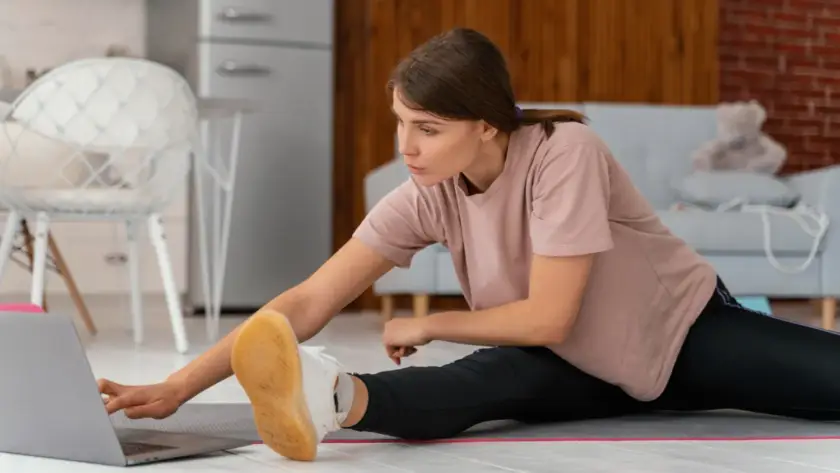
Ankle Injury Recovery Exercises
Ankles require both mobility and neuromuscular control. After even a mild sprain, joint stiffness and reduced balance are common.
1. Towel Stretch
Purpose: Restore calf and Achilles flexibility.
How to perform:
-
Sit with your leg extended
-
Loop a towel around the ball of your foot
-
Gently pull toward you
-
Hold for 15–20 seconds
-
Repeat 2–3 times
Why it works:
This stretch improves dorsiflexion range, which is essential for walking, squatting, and returning to sport.
2. Alphabet Tracing
Purpose: Improve ankle mobility and control.
How to perform:
-
Sit comfortably
-
Lift your foot slightly
-
“Draw” the alphabet in the air using your toes
Why it works:
Alphabet tracing challenges multi-directional ankle movement, restoring control after injury.
From experience, this is one of the simplest yet most effective ankle injury recovery exercises at home especially in early rehab.
Knee Injury Recovery Exercises
For mild knee injuries, restoring quadriceps activation is critical. Weak quads often prolong pain and instability.
1. Straight Leg Raises
Purpose: Strengthen quads without compressing the knee joint.
How to perform:
-
Lie on your back
-
Keep one leg straight and the other bent
-
Lift the straight leg slowly
-
Hold briefly, then lower
-
Perform 10–15 reps
Why it works:
This exercise strengthens the quadriceps without excessive knee bending ideal during early recovery.
2. Quad Sets
Purpose: Re-activate the quadriceps after injury or swelling.
How to perform:
-
Sit with your leg extended
-
Tighten the thigh muscle
-
Press the knee gently downward
-
Hold 5 seconds
-
Repeat 10–15 times
Why it works:
Quad sets restore neuromuscular connection between brain and muscle something often inhibited after injury.
These classic knee injury rehab exercises at home are foundational in both clinical and at-home programs because they build strength safely.
Shoulder Injury Recovery Exercises
The shoulder is highly mobile but less stable, making controlled early movement essential.
1. Pendulum Swings
Purpose: Restore passive shoulder mobility.
How to perform:
-
Lean forward slightly
-
Let the injured arm hang relaxed
-
Gently swing in small circles
-
Perform for 20–30 seconds
Why it works:
Pendulum swings reduce stiffness and promote joint lubrication without active strain.
2. Wall Slides
Purpose: Improve shoulder elevation safely.
How to perform:
-
Stand facing a wall
-
Place forearms on the wall
-
Slide arms upward slowly
-
Lower with control
-
Perform 8–12 reps
Why it works:
Wall slides activate scapular stabilizers while restoring overhead range of motion.
These are excellent early shoulder injury exercises at home because they balance mobility and stability.
Lower Back Recovery Exercises
Lower back rehab should focus on mobility plus core stabilization not aggressive stretching.
1. Cat-Cow Stretch
Purpose: Improve spinal mobility.
How to perform:
-
Start on hands and knees
-
Arch your back upward (Cat)
-
Then gently drop your belly and lift chest (Cow)
-
Move slowly for 8–10 repetitions
Why it works:
This movement improves circulation to spinal tissues and reduces stiffness without compression.
2. Bird-Dog Exercise
Purpose: Activate deep core stabilizers.
How to perform:
-
Start on hands and knees
-
Extend opposite arm and leg
-
Keep hips level
-
Hold 3–5 seconds
-
Repeat 8–10 times per side
Why it works:
Bird-dog builds spinal stability and coordination crucial for long-term back health.
Both exercises are foundational recovery exercises without equipment and are highly effective for core activation in early rehab.
How Often Should You Do Recovery Exercises?
One of the most common mistakes I see in home rehab is inconsistency — either doing too little or doing too much too soon.
When it comes to sports injury recovery exercises at home, the goal isn’t to train hard. The goal is to train smart and consistently.
Based on clinical rehab principles and real-world recovery experience, here’s a safe and effective structure for most mild to moderate injuries:
Frequency: 3–5 Days Per Week
Rehab exercises should be performed regularly to stimulate healing and rebuild neuromuscular control.
-
3 days/week is ideal for beginners or during early strengthening.
-
4–5 days/week works well during mobility and balance phases.
Daily high-intensity rehab is usually unnecessary. Tissues need recovery time to adapt.
From experience, people who space sessions evenly across the week see steadier progress and fewer flare-ups.
Sets: 2–3 Per Exercise
For most early to mid stage rehab exercises:
-
Start with 2 sets
-
Progress to 3 sets as tolerance improves
The focus should remain on:
-
Slow, controlled movement
-
Proper alignment
-
Pain below 4/10
Quality always outweighs volume.
Repetitions: 10–15 Per Set
This rep range works well for rebuilding muscular endurance and joint stability without overloading healing tissue.
Lower reps (8–10) may be appropriate for controlled strength work.
Higher reps (12–15) are helpful for endurance and circulation.
Avoid pushing to muscular failure during rehab that’s for performance training, not recovery.
Rest Days: 1–2 Per Week
Rest is not a setback it’s part of the healing process.
Muscle tissue, tendons, and ligaments remodel during recovery periods. Overtraining injured tissue often leads to inflammation spikes.
In practical rehab programming, I recommend:
-
1–2 full rest days per week
-
Or alternating upper and lower body focus if multiple areas are involved
If soreness lasts longer than 24 hours, reduce intensity or volume.
How to Know If You’re Doing Too Much
Watch for:
-
Increased swelling
-
Lingering pain beyond the next day
-
Decreased range of motion
-
Joint instability
These are signs to scale back not push harder.
Common Mistakes That Delay Recovery
Injury recovery is rarely delayed because someone “didn’t try hard enough.”
In most cases, it’s delayed because of avoidable mistakes.
I’ll be honest, I’ve personally made two of the mistakes below during my own recovery. I assumed rest would solve everything, and later I pushed too hard too fast. Both decisions cost me extra weeks of healing.
If you want faster, safer recovery, avoid these common pitfalls.
1. Skipping Rehab (Relying on Rest Alone)
Rest is important but rest alone is rarely the complete solution.
After the acute inflammation phase, your body needs progressive movement and loading to:
-
Restore circulation
-
Rebuild muscle strength
-
Improve joint stability
-
Retrain neuromuscular control
Without structured rehab:
-
Muscles weaken
-
Joints stiffen
-
Balance declines
-
Reinjury risk increases
From both clinical evidence and real-world observation, active recovery consistently outperforms passive rest once pain and swelling are controlled.
Rest protects.
Rehab rebuilds.
2. Doing Too Much Too Soon
This is one of the most common recovery mistakes especially among athletes and highly motivated individuals.
Once pain decreases slightly, it’s tempting to:
-
Return to full workouts
-
Increase resistance rapidly
-
Add impact or explosive movements
But tissue healing follows a biological timeline. Muscles recover faster than tendons and ligaments. If loading exceeds tissue capacity, inflammation spikes again.
Overtraining delays healing and often sends people back to Phase 1.
In my case, progressing too aggressively extended my recovery far longer than necessary. Patience would have saved weeks.
3. Ignoring Pain
Pain is not the enemy. It’s feedback.
Sharp, worsening, or lingering pain is your body signaling:
-
Load is too high
-
Form may be off
-
Tissue isn’t ready
Pushing through sharp pain during rehab is different from pushing through workout fatigue.
A helpful rule:
-
Mild discomfort (0–3/10): Acceptable
-
Sharp or escalating pain (5+/10): Stop and modify
Listening to pain early prevents long-term setbacks.
4. Poor Sleep & Nutrition
Recovery doesn’t just happen during exercise it happens during rest.
Sleep and nutrition directly affect:
-
Tissue repair
-
Hormonal balance
-
Inflammation control
-
Muscle protein synthesis
When sleep is poor or nutrition is inadequate, healing slows dramatically.
A balanced nutritional approach that includes:
-
Adequate protein
-
Anti-inflammatory whole foods
-
Fiber-rich vegetables and fruits
-
Healthy fats
can support systemic recovery.
For example, a structured approach like a high fiber diet for weight loss can help regulate inflammation, improve gut health, and stabilize blood sugar all of which indirectly support tissue healing.
From experience, people often focus only on exercises and forget that recovery is a full-body process.
How to Speed Up Sports Injury Recovery at Home
Here’s what genuinely worked for me:
✔ Protein Intake
Supports tissue repair.
✔ Anti-Inflammatory Foods
Leafy greens, berries, omega-3 fats.
✔ Hydration
Improves circulation.
✔ Sleep
Critical for muscle rebuilding.
✔ Ice vs Heat Therapy
Using the right therapy at the right time (as explained in the earlier guide) improves outcomes dramatically.
After full recovery, gradually reintroduce activity. A short session like this 20-minute HIIT workout can help test strength once cleared.
When to Stop Home Exercises and See a Professional
Stop your injury recovery workout plan at home if you notice:
-
Increased swelling
-
Persistent pain
-
Loss of mobility
-
Instability
Professional assessment prevents long-term damage.
Final Thoughts: Recover Stronger, Not Just Faster
The goal isn’t just to heal. It’s to come back better.
A smart sports injury rehab plan at home includes:
-
Mobility
-
Strength
-
Stability
-
Nutrition
-
Rest
-
Gradual return to activity
If done consistently, best home exercises for sports injury recovery can restore confidence and performance safely.
Remember:
👉 Be patient
👉 Follow a structured plan
👉 Listen to your body
👉 Focus on long-term strength
Recovery is a process but with the right sports injury recovery exercises at home, you can rebuild safely, naturally, and effectively.